
How Does Wireless Freezer Temperature Monitoring Technology Work to Help Businesses Maintain HACCP Standards?
HACCP (Hazard Analysis and Critical Control Point) is a systematic preventive approach to food safety that identifies physical, chemical, and biological hazards in production processes. This internationally recognized framework protects consumers by establishing critical control points where hazards can be prevented, eliminated, or reduced to safe levels.
Temperature control is one of the most crucial critical control points in HACCP plans. Freezers and refrigerators must maintain specific temperature ranges to prevent bacterial growth and food spoilage.
Wireless freezer temperature monitoring technology automates this critical function by using sensors and data loggers that continuously track temperatures and transmit readings remotely via WiFi or other wireless technologies. These systems provide 24/7 surveillance of cold storage units, automatically recording time-stamped data and sending real-time alerts when temperatures deviate from safe limits. This technology eliminates manual checking errors while ensuring businesses maintain consistent HACCP compliance through precise, documented temperature control.

What Are the Key Components of a Wireless Freezer Temperature Monitoring System?
A wireless freezer temperature monitoring system consists of three essential elements working together to track cold storage conditions.
1. Wireless Sensors
Wireless sensors serve as the frontline devices, positioned inside freezers and refrigerators to measure ambient temperatures continuously.
2. Temperature Data Loggers
These sensors connect to temperature data loggers that record readings at predetermined intervals—typically every few minutes—creating a comprehensive temperature history.
3. Centralized Platform
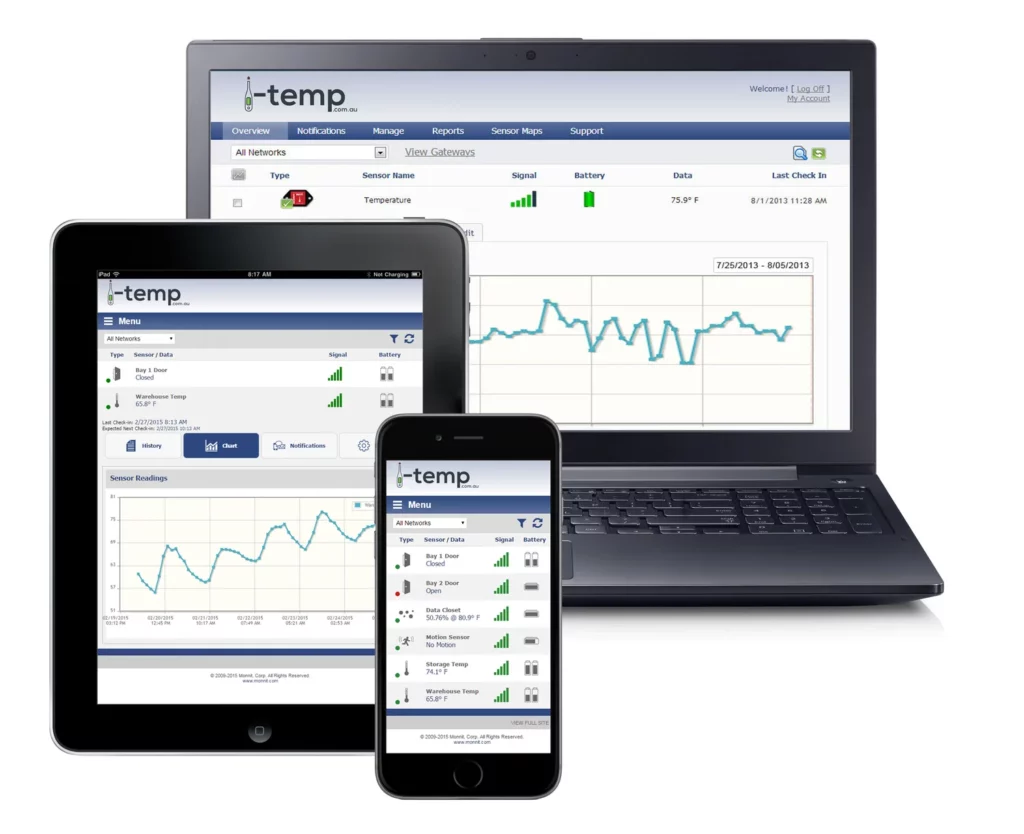
The data loggers store this information locally while simultaneously transmitting it to a centralized platform. Remote monitoring capabilities allow managers and quality assurance teams to access temperature data from any location using computers, tablets, or smartphones. This accessibility transforms how businesses oversee their cold chain operations.
How Does Wireless Technology Work in Temperature Monitoring?
WiFi technology represents the most common transmission method, connecting sensors directly to existing network infrastructure. Alternative wireless technologies include:
- Cellular networks for locations without reliable WiFi coverage
- Bluetooth Low Energy (BLE) for short-range applications
- LoRaWAN for long-range, low-power requirements in large facilities
- Proprietary radio frequency systems designed for industrial environments
Why Are Food Simulant Probes Important?
Many modern systems incorporate food simulant probes that replicate the thermal properties of actual food products. These specialized sensors provide more accurate readings than standard air temperature probes, measuring the true thermal conditions experienced by stored items.
Ensuring Accuracy in Temperature Measurement
The sensors typically maintain accuracy within ±1°C when properly calibrated, with annual calibration recommended to ensure measurement precision remains consistent with HACCP requirements.
Why Is Continuous Temperature Monitoring Crucial for Businesses to Ensure HACCP Compliance?
Continuous monitoring provides uninterrupted visibility into freezer and refrigerator conditions, ensuring temperature safety limits remain within the required range at all times. Without 24/7 tracking, temperature excursions during nights, weekends, or holidays can go undetected for hours or days, potentially compromising entire inventories of perishable products.
HACCP principles require businesses to identify and control critical control points (CCPs) where hazards must be prevented or reduced to safe levels. Cold storage temperature represents one of the most vital CCPs in food safety management. Manual checks performed two or three times daily create gaps in monitoring that leave businesses vulnerable to:
- Undetected equipment malfunctions during off-hours
- Gradual temperature drift that falls outside safe zones
- Door seal failures or power interruptions that occur between checks
- Inability to pinpoint exactly when temperature deviations began
Continuous monitoring systems capture temperature readings every few minutes, creating a complete record that demonstrates consistent control over this critical control point. This constant surveillance enables businesses to prove they maintained temperature safety limits throughout storage periods, not just during scheduled manual checks. The comprehensive data trail becomes essential evidence during regulatory inspections, showing sustained compliance rather than isolated snapshots of acceptable conditions.
How Do Real-Time Alerts from Wireless Freezer Temperature Monitoring Systems Enhance Food Safety Management for Businesses?
Real-time alerts transform food safety management by instantly notifying staff when freezer temperatures deviate from preset limits. These automated systems send notifications through multiple channels—text messages, emails, or app alerts—directly to designated personnel’s smartphones, tablets, or computers the moment a temperature excursion occurs.
Immediate Corrective Actions
The speed of these notifications enables immediate corrective actions before food products reach unsafe temperatures. When a freezer malfunctions at 2 AM, managers receive instant alerts allowing them to respond within minutes rather than discovering the problem during routine morning checks. This rapid response window can mean the difference between saving inventory and facing costly product losses.
Elimination of Missed Deviations
Automated alert systems eliminate the risk of missed temperature deviations that plague manual monitoring schedules. Traditional probe thermometer checks occur only at specific intervals—typically twice daily—creating gaps where problems go undetected for hours. Wireless monitoring fills these gaps with constant surveillance and instant communication.
Customizable Alerts for HACCP Compliance
The customizable nature of these alerts allows businesses to set specific thresholds matching their HACCP critical limits. A seafood processor might configure alerts at -18°C for frozen fish, while an ice cream manufacturer sets different parameters. Multiple escalation levels ensure alerts reach backup contacts if primary staff members don’t respond within designated timeframes, creating redundancy in the notification system.
How Automated Data Recording by Wireless Freezer Temperature Monitoring Systems Support HACCP Documentation and Traceability for Businesses
Automated data logging solves the reliability problems of manual temperature recording. Traditional methods require staff to physically check and record temperatures multiple times daily, creating opportunities for missed checks, transcription errors, or falsified entries. Wireless systems capture readings at predetermined intervals—typically every 1-15 minutes—without human intervention, generating comprehensive time-stamped records that provide an unbroken chain of evidence.
The accuracy of these digital records directly meets HACCP’s documentation requirements. Each temperature reading includes the exact date, time, location, and measured value, creating an audit trail that regulatory inspectors can verify instantly. When health authorities or certification bodies request proof of temperature control during specific periods, businesses can produce detailed reports spanning days, weeks, or months within minutes.
Traceability becomes significantly more robust through automated systems. If a food safety incident occurs, businesses can quickly identify when temperature deviations happened, their duration, and which products were affected. This detailed visibility supports effective recall procedures and root cause analysis.
The stored data remains tamper-proof in cloud-based systems, unlike paper logs that can be altered or lost. Annual audits become streamlined processes rather than stressful events, as compliance officers can access historical data demonstrating consistent adherence to critical control points throughout the entire monitoring period.
How Software Integration with Wireless Freezer Temperature Monitoring Systems Can Improve Digital HACCP Plan Management for Businesses
Software integration turns raw temperature data into actionable insights for effective HACCP management. Integrated platforms bring together all monitoring data into one dashboard that can be accessed from computers, tablets, or smartphones. This eliminates the need to manually check multiple devices or locations.
Modern digital HACCP plans have several key features that set them apart:
- Customizable reporting tools: These tools automatically generate compliance documents by pulling temperature data directly from wireless sensors. This allows for the creation of audit-ready reports in seconds.
- Historical data analysis: With this feature, businesses can identify temperature trends, equipment performance issues, and potential risks before they become critical problems.
- Multi-site management capabilities: Businesses with multiple locations can monitor all freezers and refrigerators from one centralized system.
- User access controls: Only authorized personnel can modify settings or acknowledge alerts, ensuring accountability.
- Automated compliance verification: Temperature readings are cross-referenced against HACCP critical limits, instantly flagging any deviations.
Many platforms operate without recurring subscription fees, making them cost-effective for businesses of all sizes. The software securely stores years of temperature records, providing the documentation trail regulators require during inspections. Integration with existing business management systems streamlines workflows, reduces administrative burden, and strengthens food safety protocols through seamless data sharing across departments.
Which Industries Can Benefit Most from Implementing Wireless Freezer Temperature Monitoring Technology to Maintain HACCP Standards?
Food processing plants require wireless freezer temperature monitoring to safeguard raw materials and finished products throughout production cycles. These facilities handle large volumes of temperature-sensitive ingredients and must demonstrate consistent cold chain management during HACCP audits.
Supermarkets benefit significantly from this technology by monitoring multiple refrigeration units across different departments simultaneously. Wireless systems allow store managers to oversee frozen food sections, meat departments, and dairy cases from a single dashboard, ensuring all products remain within safe temperature ranges.
Restaurants and catering services use wireless monitoring to protect perishable inventory in walk-in freezers and reach-in refrigerators. The technology helps kitchen staff focus on food preparation rather than manual temperature logging, while still maintaining complete HACCP documentation.
Cold storage warehouses depend on wireless systems to monitor vast freezer spaces storing products for multiple clients. The automated tracking provides verifiable temperature records that satisfy both HACCP requirements and customer quality agreements.
Healthcare facilities implement this technology for vaccine refrigeration, where temperature deviations can compromise medication efficacy. Pharmaceutical distributors similarly rely on wireless monitoring to maintain product integrity during storage.
How wireless freezer temperature monitoring helps maintain HACCP standards becomes evident across these diverse sectors—each faces unique challenges but shares the common need for reliable, documented temperature control that protects product safety and regulatory compliance.
Why Should Businesses Consider Adopting Wireless Freezer Temperature Monitoring Technology as a Best Practice for Ensuring Consistent HACCP Compliance?
Wireless freezer temperature monitoring offers clear benefits that improve food safety operations while making tasks easier. This technology changes upholding HACCP standards from a reactive checklist approach to a proactive management system.
Immediate Benefits for Businesses
By implementing this technology, businesses can expect to see immediate returns on their investment through:
- Elimination of manual logging errors: This ensures that there are no compliance gaps during audits.
- Reduced labor costs: Staff can now focus on taking corrective actions instead of performing routine checks.
- Prevention of costly product losses: Early detection of temperature deviations helps prevent significant financial losses.
- Streamlined audit preparation: Automatically generated, time-stamped records make audit preparation more efficient.
- Enhanced regulatory confidence: Continuous monitoring documentation demonstrates compliance with regulations.
The shift towards automated monitoring is not just about convenience; it is also a strategic investment in operational excellence. When businesses implement wireless freezer temperature monitoring, they will likely experience:
- Fewer compliance violations
- Improved consistency in product quality
- Increased trust from consumers
These outcomes highlight how the technology directly supports the maintenance of HACCP standards.
Furthermore, wireless freezer temperature monitoring serves a dual purpose. It not only protects businesses by ensuring food safety but also gives them a competitive edge in markets where reputation for food safety significantly impacts success.
Click here: Why Reliable Temperature Monitoring Equipment Is Essential for Food Services